
Worksheet · Nutrition
Brain-Boosting Lunchbox Builder
Six columns, one choice from each, and a lunchbox that comes home empty — plus a page for your child's real preferences.
Ages 4–14 10 min
Every printable, planner, workbook and visual support in the Thrive Library — 66 in total. Filter by topic, format or access.
Six columns, one choice from each, and a lunchbox that comes home empty — plus a page for your child's real preferences.
Thirty small daily activities that take ten minutes and cost nothing, plus a blank calendar to refill with your own.
Narrow a long list to five family values, then write the mission, the motto, and a promise everyone signs.

A three-page screen agreement covering time, places, platforms and consequences — written together and signed by everyone, adults included.

Seven nutrients that shape mood, focus and sleep: why each matters, where to find it, and what it looks like on a Tuesday.

What is realistic at every age from two to sixteen, with a confidence checklist children tick themselves.
Design a wind-down that starts earlier than you think and ends with a predictable, repeatable goodnight.

The last forty minutes before sleep, sequenced so the nervous system has time to descend.
Weekly prompts that separate what happened from what you concluded about yourself as a parent.
Anchor one shared mindful practice to something your family already does every day.

Decide in advance what stays and what drops when the family is in survival mode.
An externalised homework flow — start ritual, visible timer, movement breaks and a clear finish line.
Build a graded, ten-step courage plan for one specific fear, so avoidance loosens its grip a rung at a time.
A simple, non-frightening plan for teaching personal safety and trusted adults in a developmentally safe way.
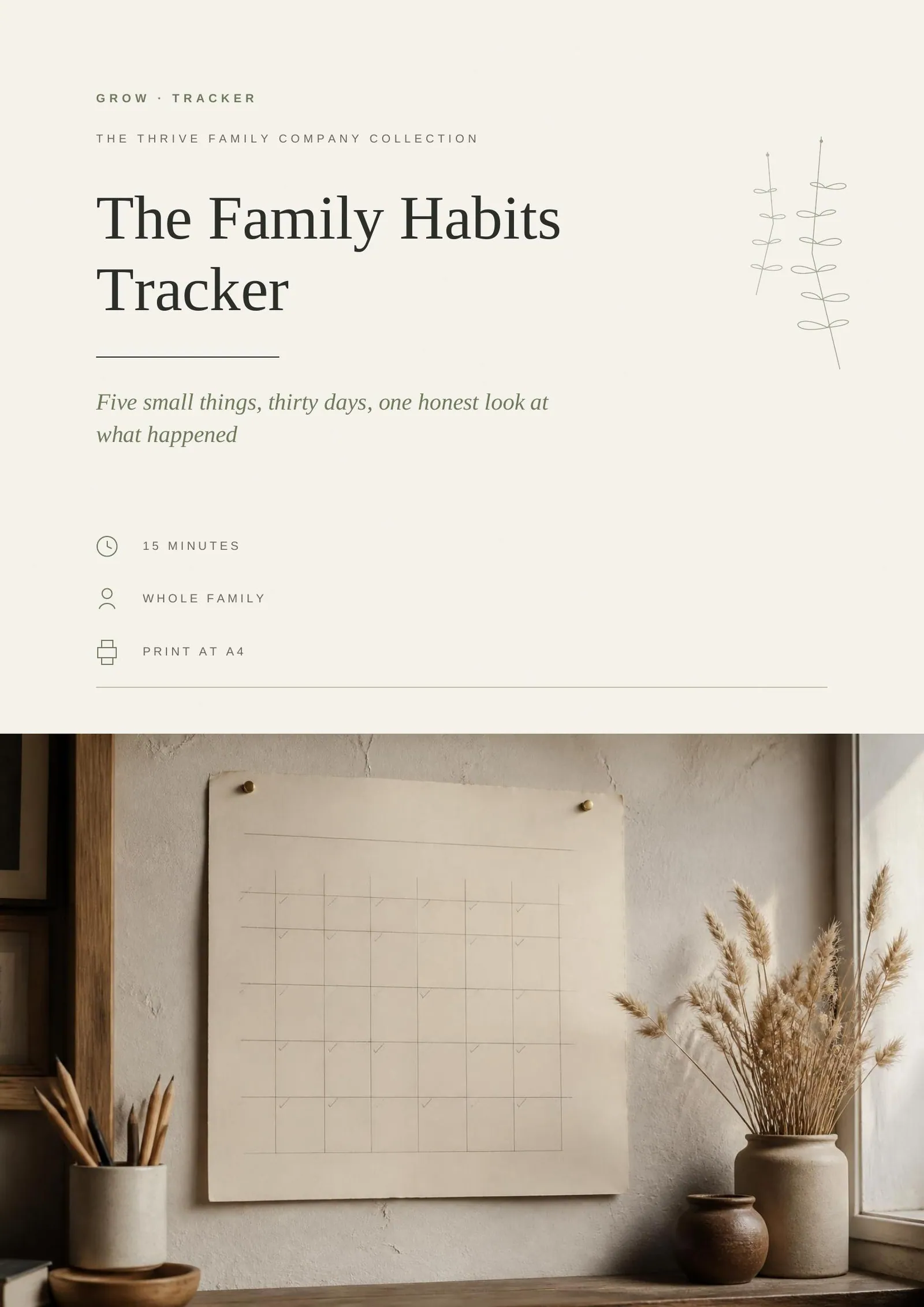
Five small family habits, thirty days of squares, and an honest reflection on what to keep, change or let go.
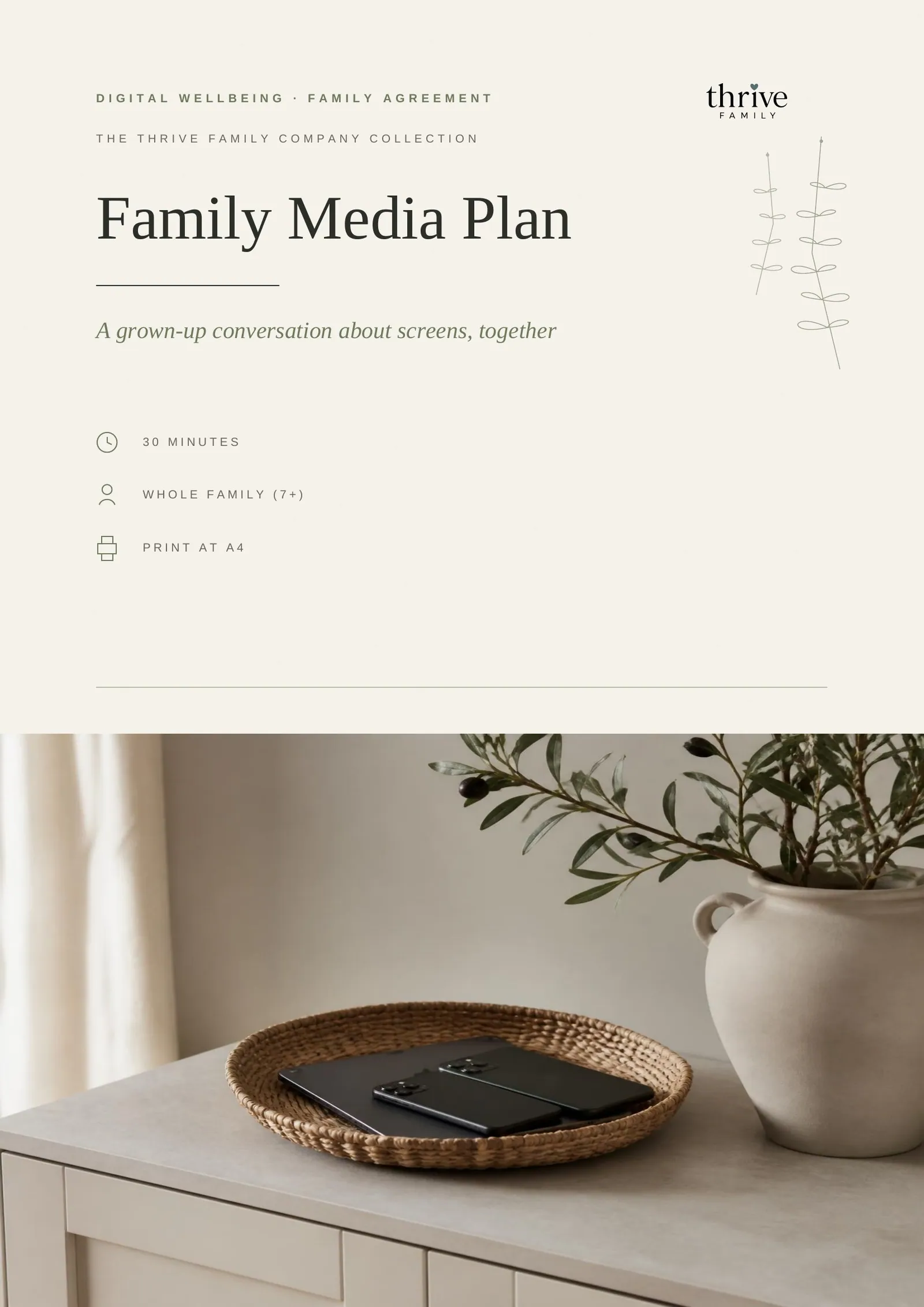
Agree where screens live, when they sleep and what happens at the end — before the next argument, not during it.
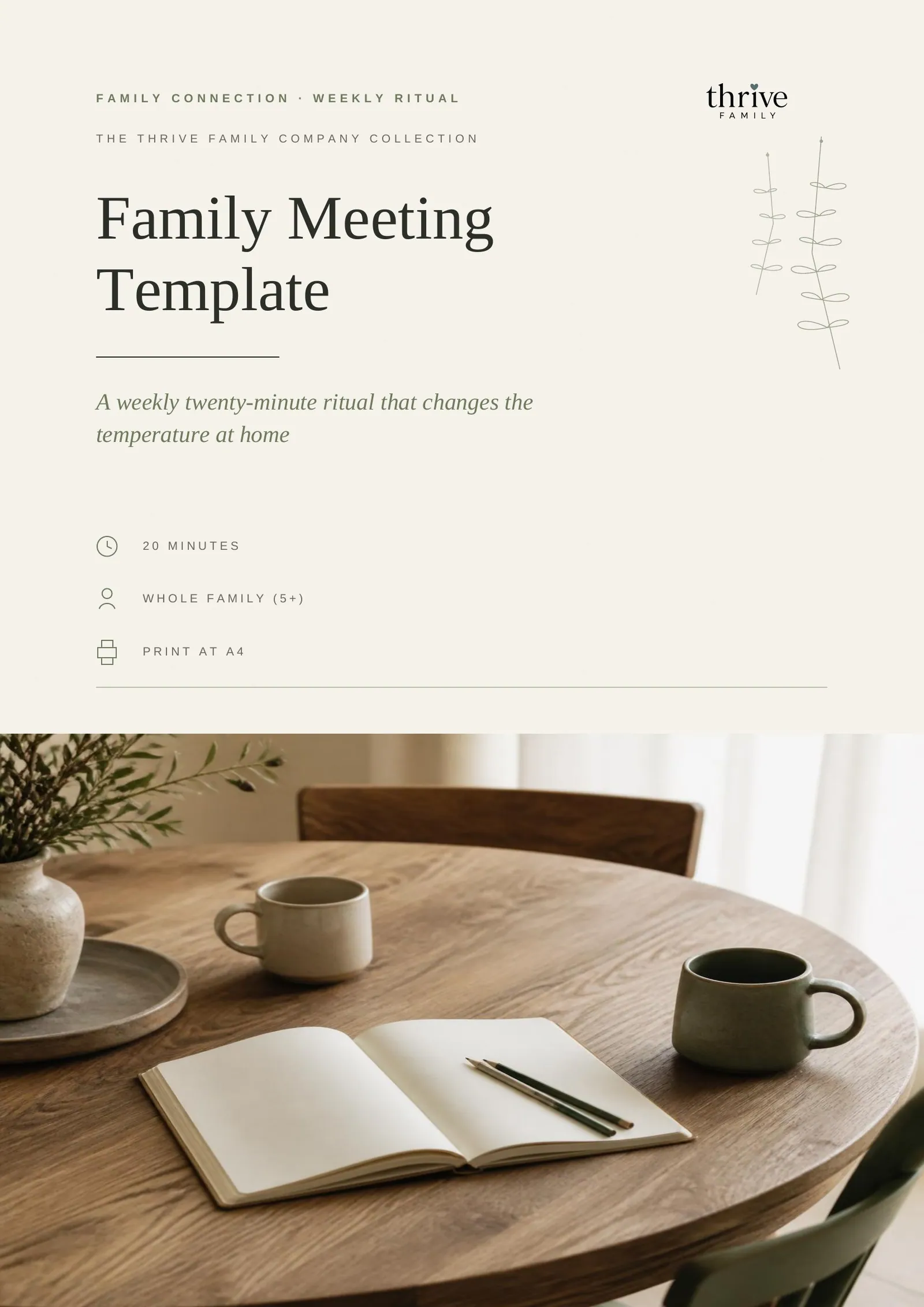
A twenty-minute agenda that holds appreciation, problem-solving and repair without becoming a tribunal.
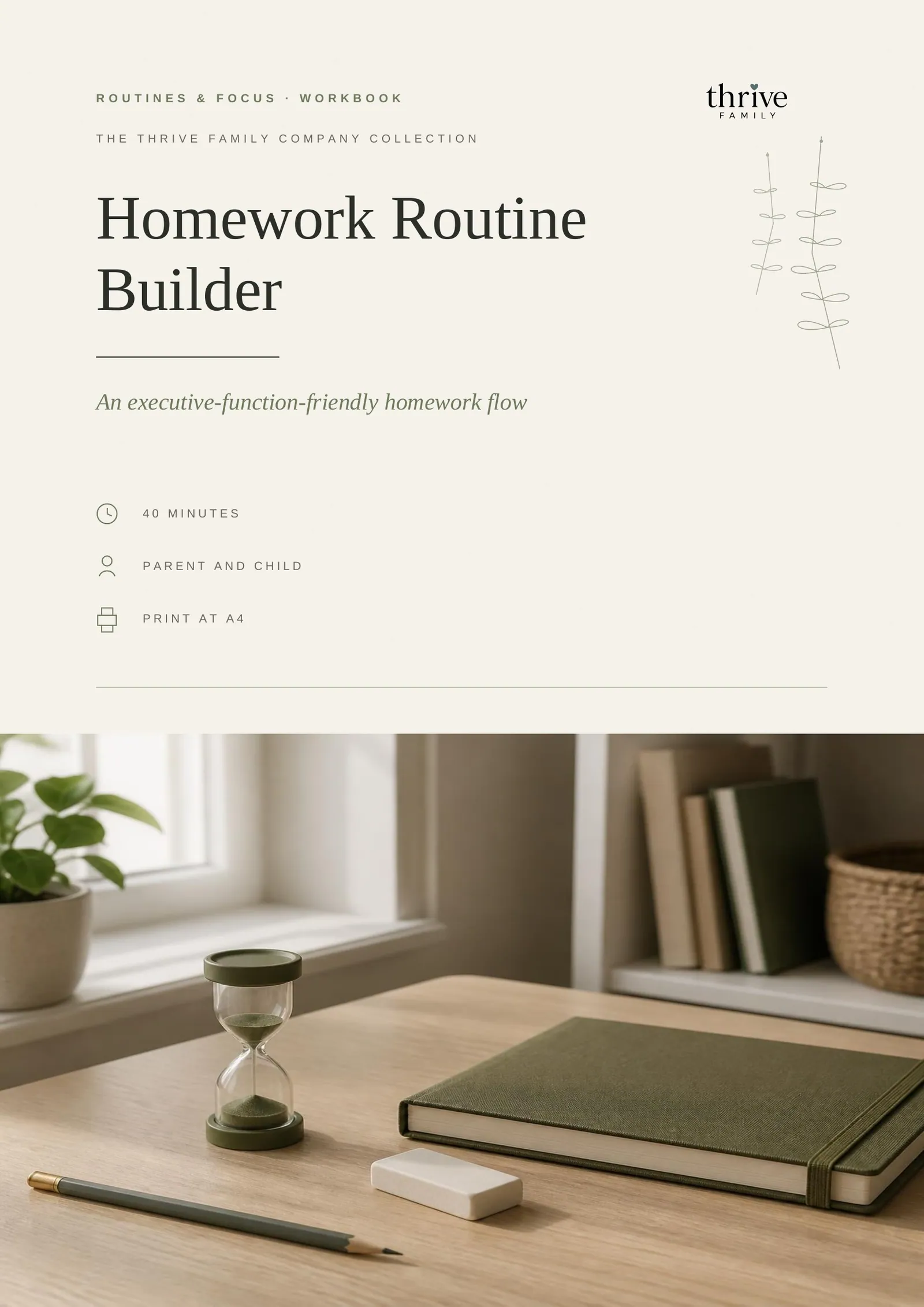
An executive-function-friendly homework flow with a start ritual and a visible finish.
Design a weekly rhythm for the whole household — anchored, realistic and visible to everyone.
Turn what you know about your child's escalation into a written, agreed plan everyone can follow.
A picture-led morning sequence that removes the twelve verbal reminders and lets the chart do the nagging.

Design tiny daily rituals — two minutes at the door, five at bedtime — that rebuild closeness.

Kind, believable sentences a child can say to themselves after a hard moment.
Small, compassionate, staged steps back into the building — with the school's part written down too.
A guided script you can read aloud to yourself in a parked car before walking back in.
A gentle guide for children and parents to name, keep, and return to memories of someone who has died.

Twelve practices under ninety seconds, for the days when nothing longer is going to happen.
A week laid out visually, with the transitions and materials that usually go missing made explicit.
Openers, pauses and exits for the conversations teenagers refuse to have sitting down and face to face.

Four child-friendly breath patterns on cards small enough to live in a pocket, a bag or a calm corner.
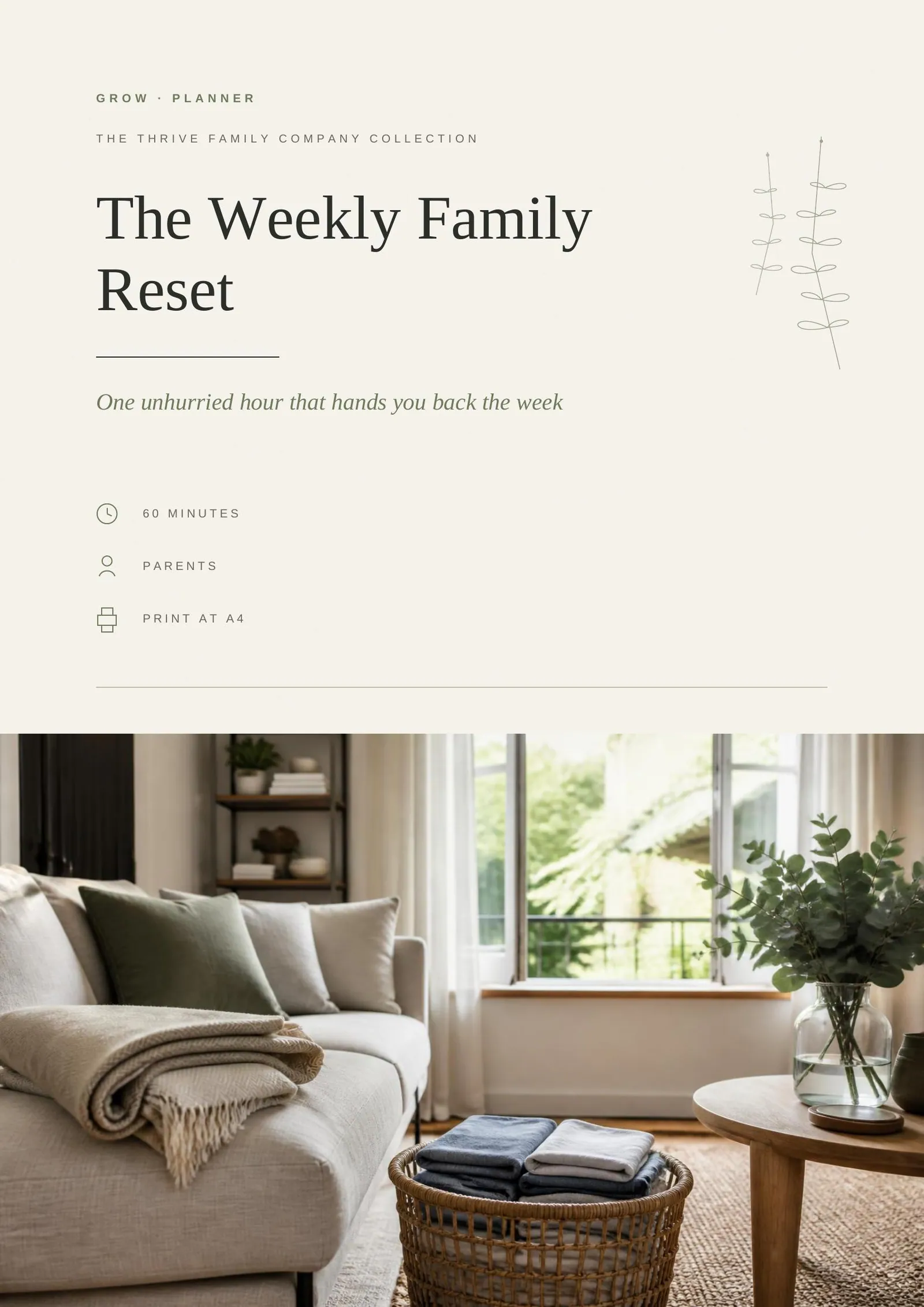
One unhurried Sunday hour — laundry, school prep, meals, admin and three priorities — that hands you back the week.
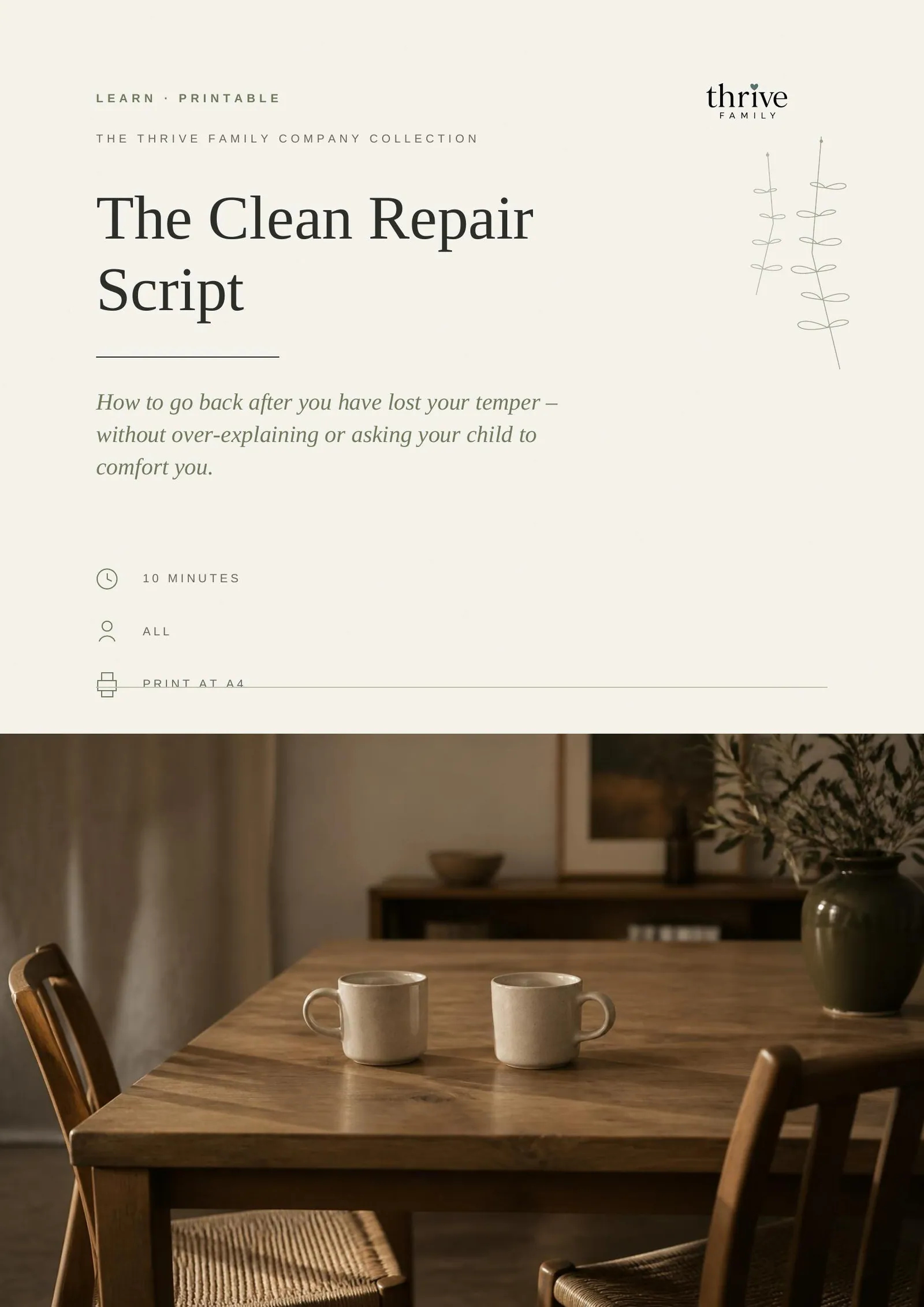
How to go back after you have lost your temper — without over-explaining or asking your child to comfort you.
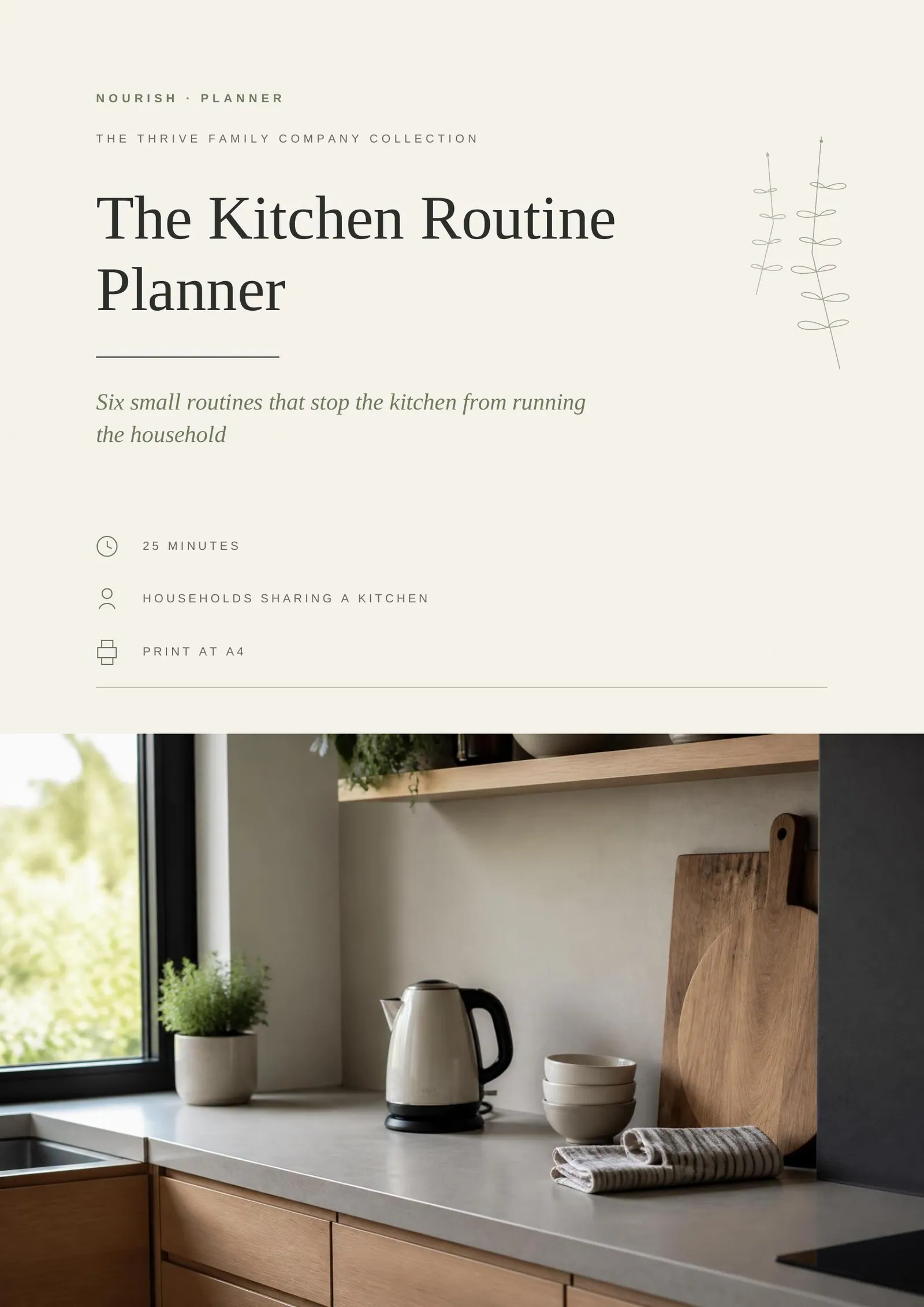
Six written routines — mornings, lunches, dinner prep, the evening reset, Sunday prep and shopping — with names beside every task.
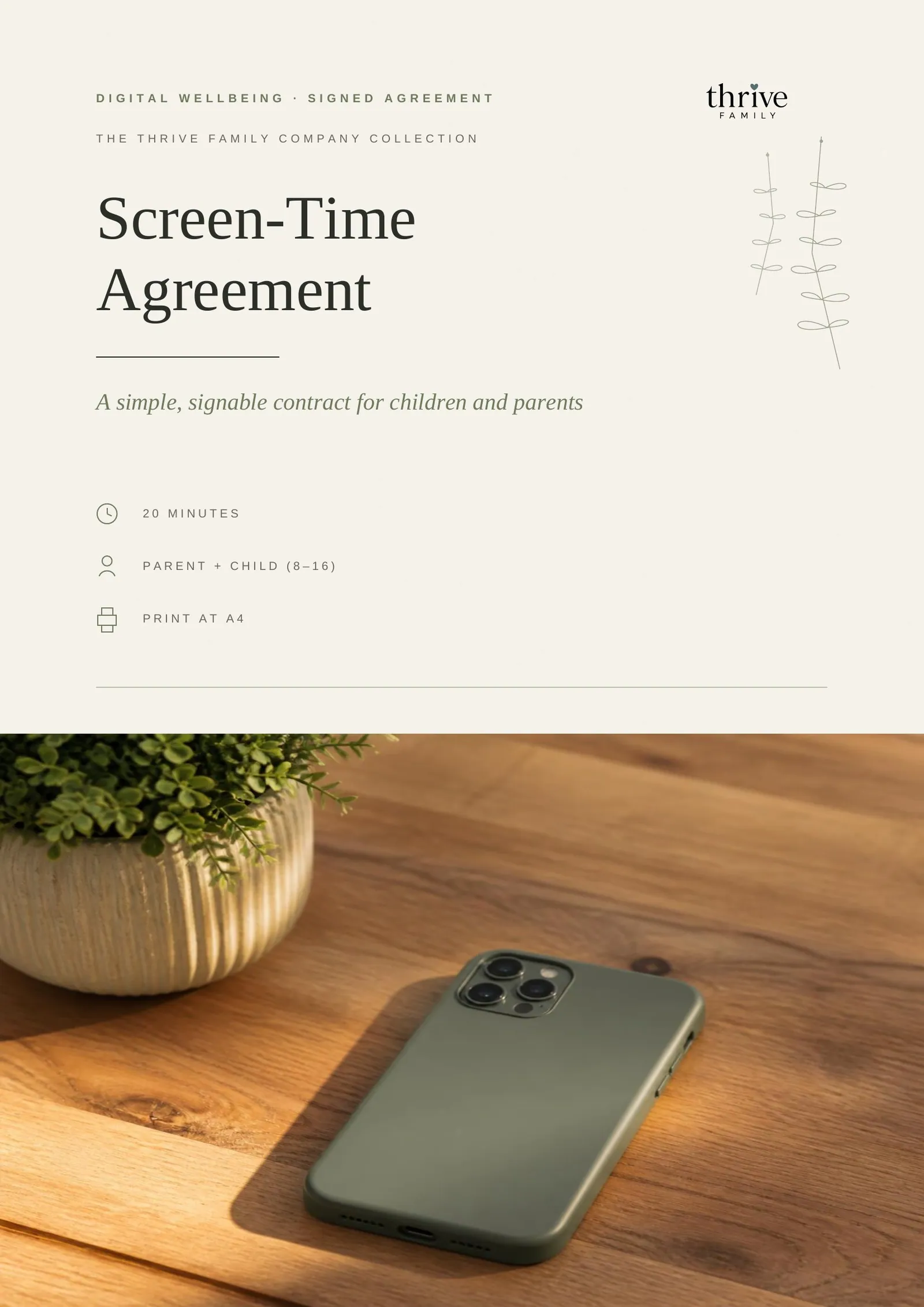
A signed, mutual agreement that turns a parental rule into something a child had a hand in writing.
A three-step pause for the second between your child's behaviour and your response.
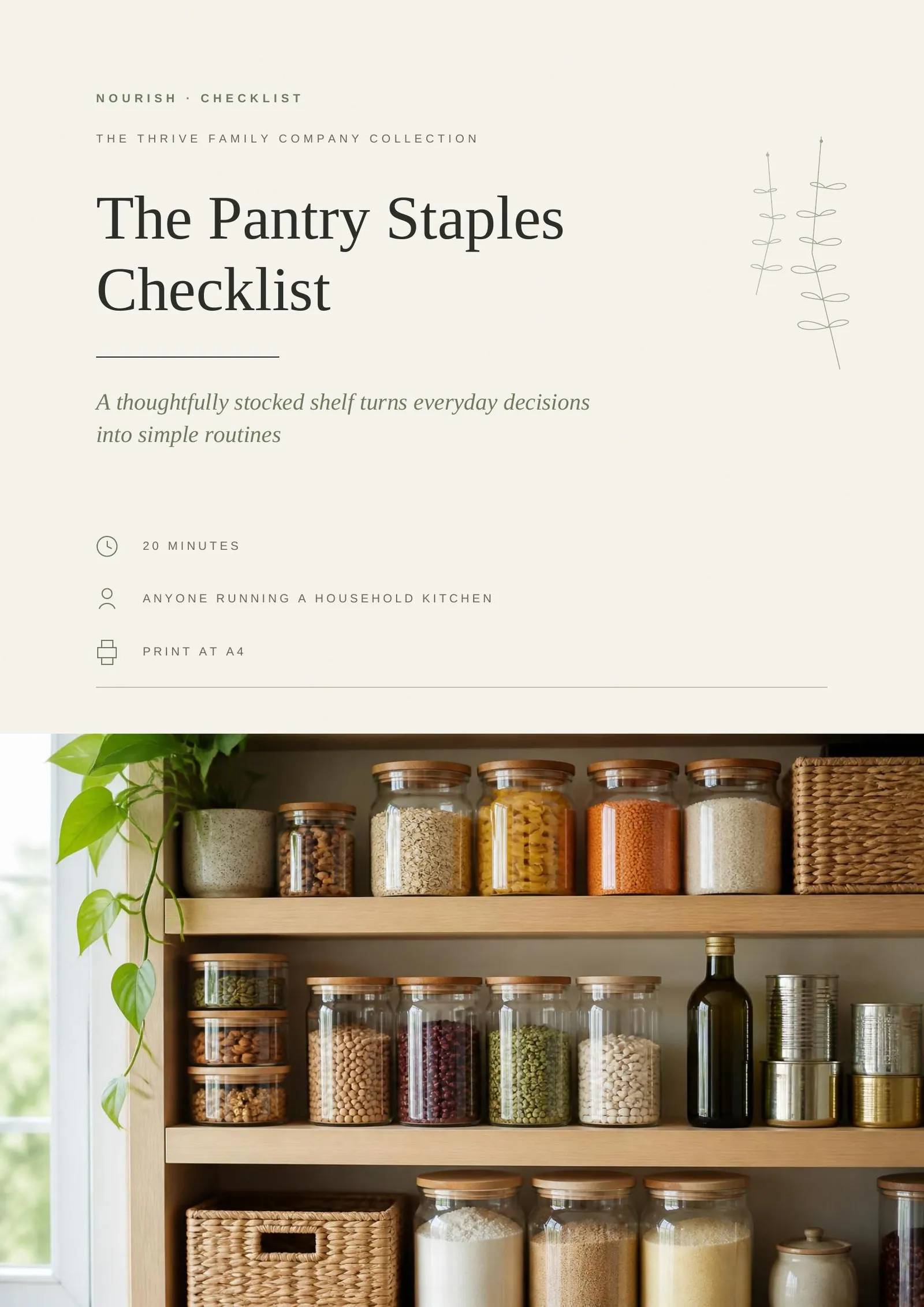
Thirty considered items that combine into forty meals, with a shelf-by-shelf check and a restocking rhythm.

Plan a co-regulation space with the sensory items, boundaries and language that make it work.
A visual, child-friendly morning plan built backwards from the time you must leave.
Map your child's escalation curve and agree, in advance, what helps at green, amber and red.
A five-minute audit of sleep, settings and social feeds — the three levers that matter most.
Protect fifteen uninterrupted, child-led minutes and plan how you will guard them.
A deck of concrete strategies to choose from in the moment, because nobody invents coping skills mid-storm.
A clinically framed self-assessment across exhaustion, distancing and loss of efficacy.
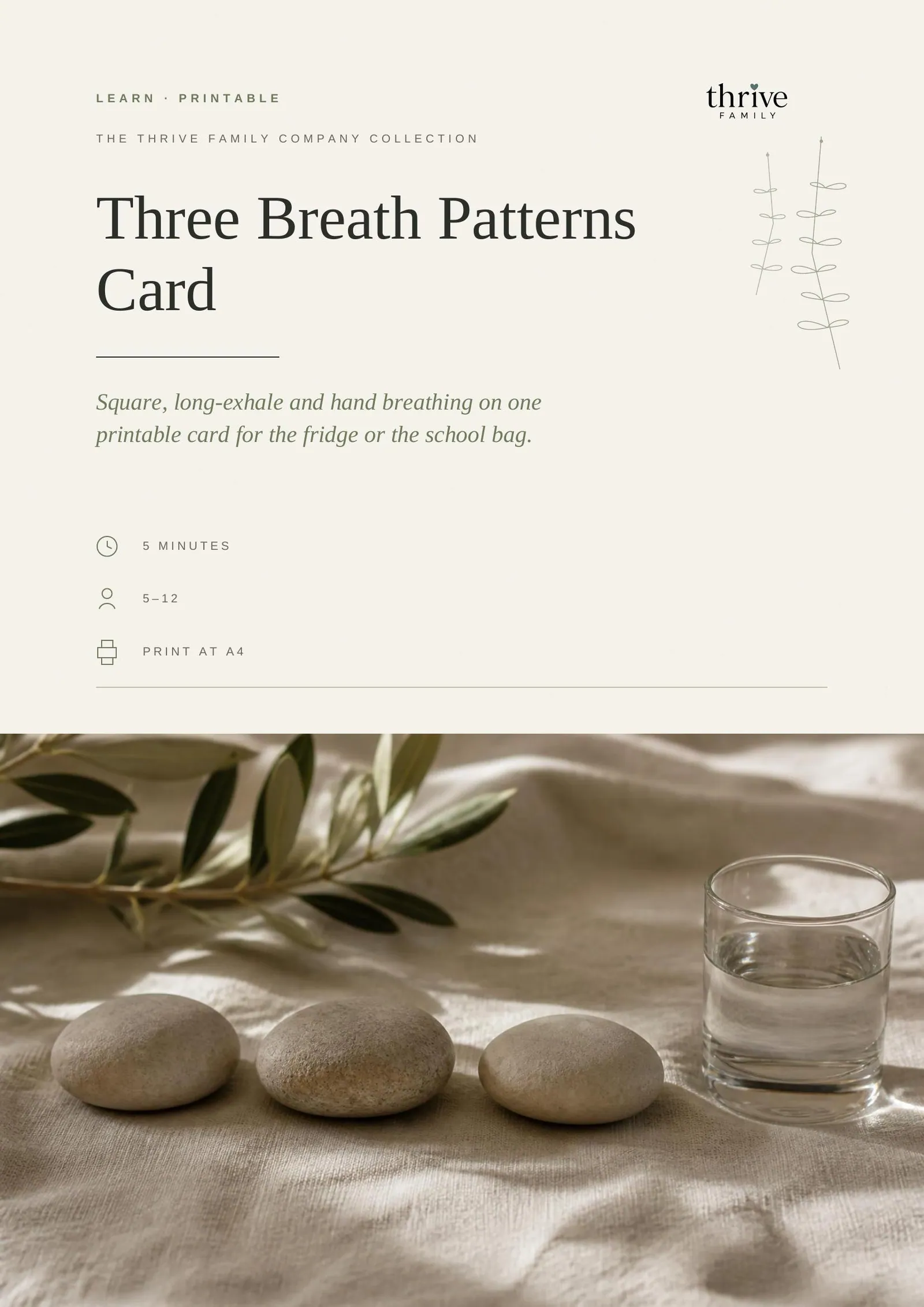
Square, long-exhale and hand breathing on one printable card for the fridge or the school bag.
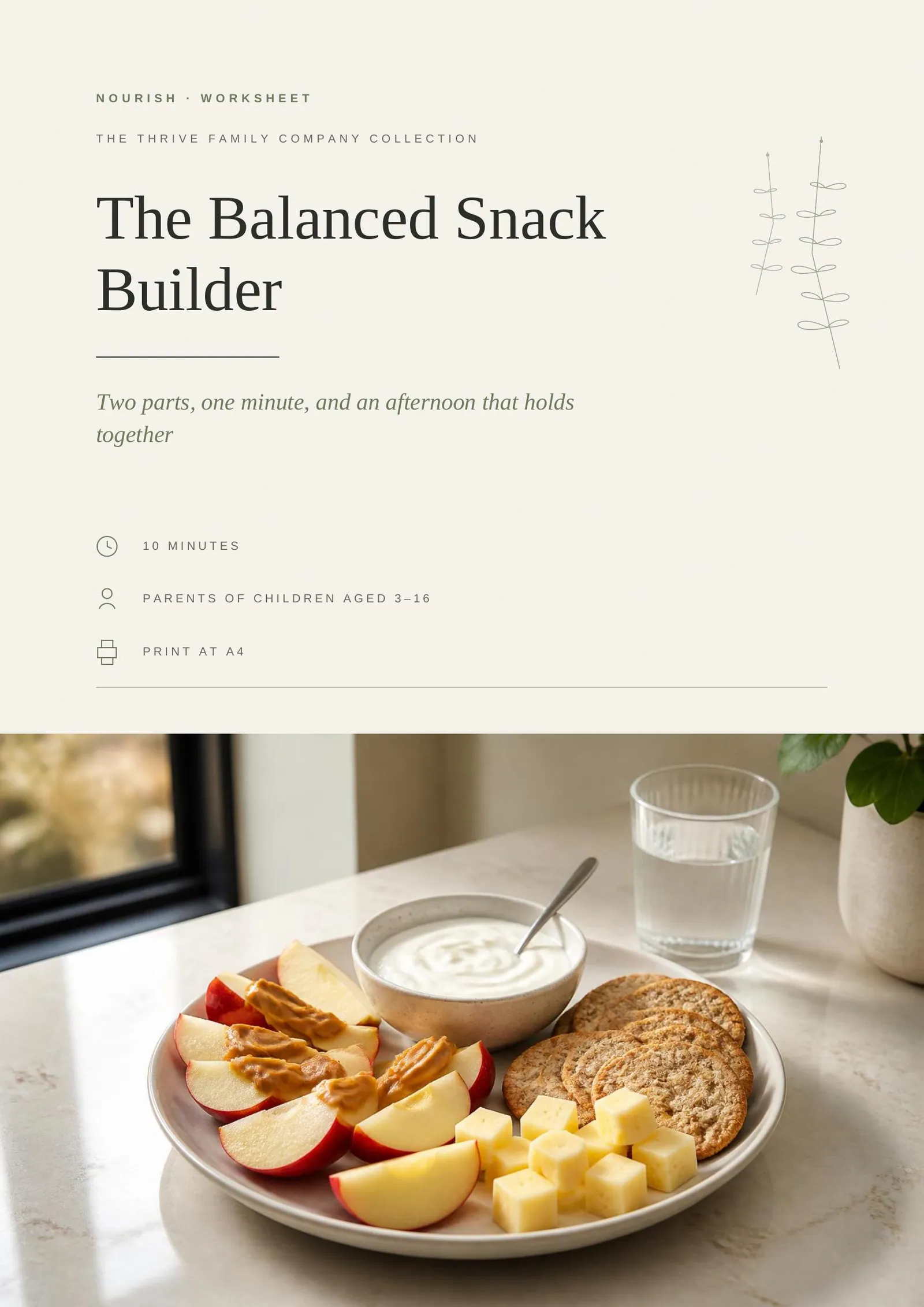
A two-part snack formula and eight combinations your child has actually agreed to, for the hour between school and dinner.
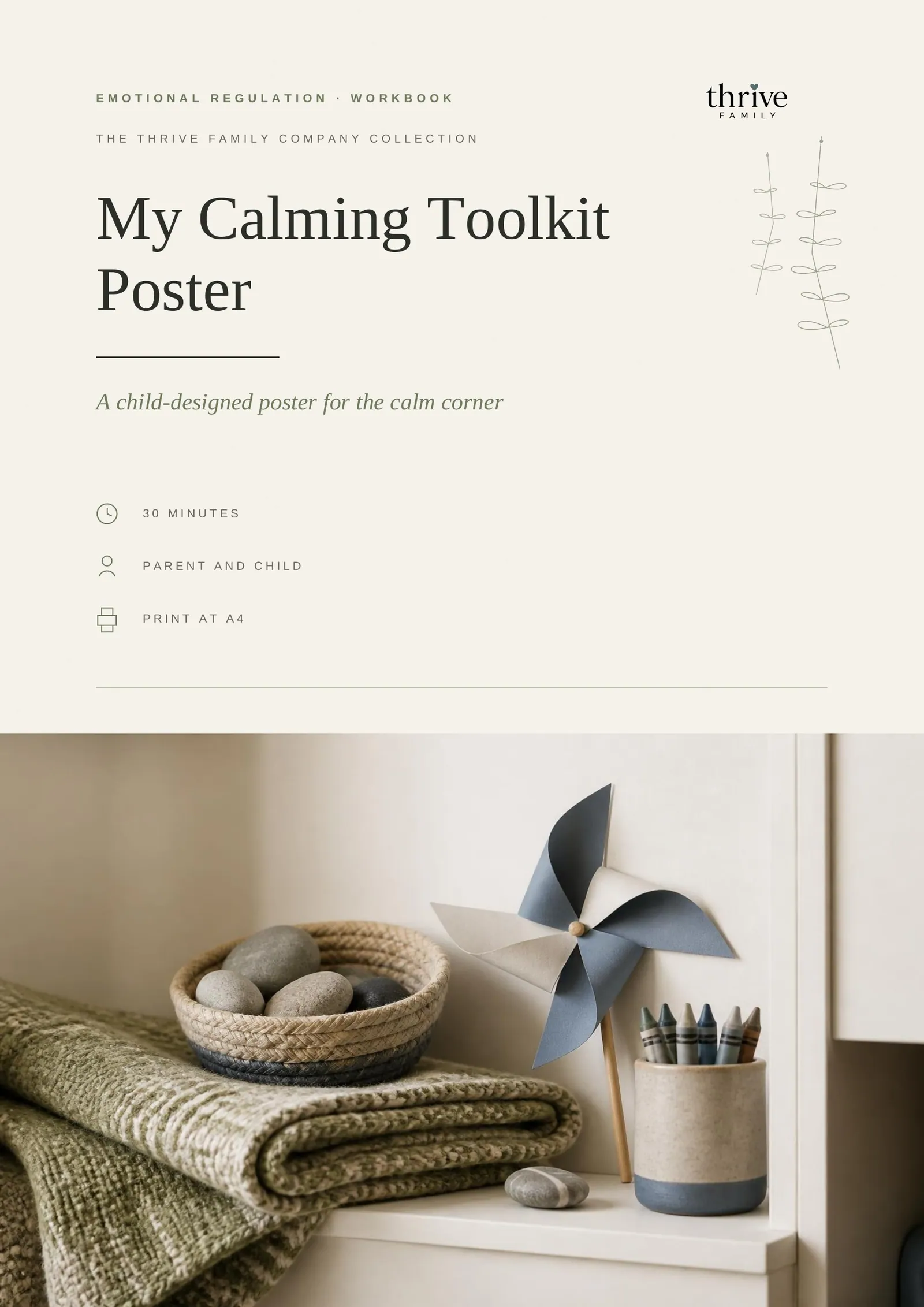
A child-designed poster of what works for them, made while calm and used when not.

The signature Grow workbook: identity, traditions, repair, language, bucket list, vision and legacy — an annual family ritual.
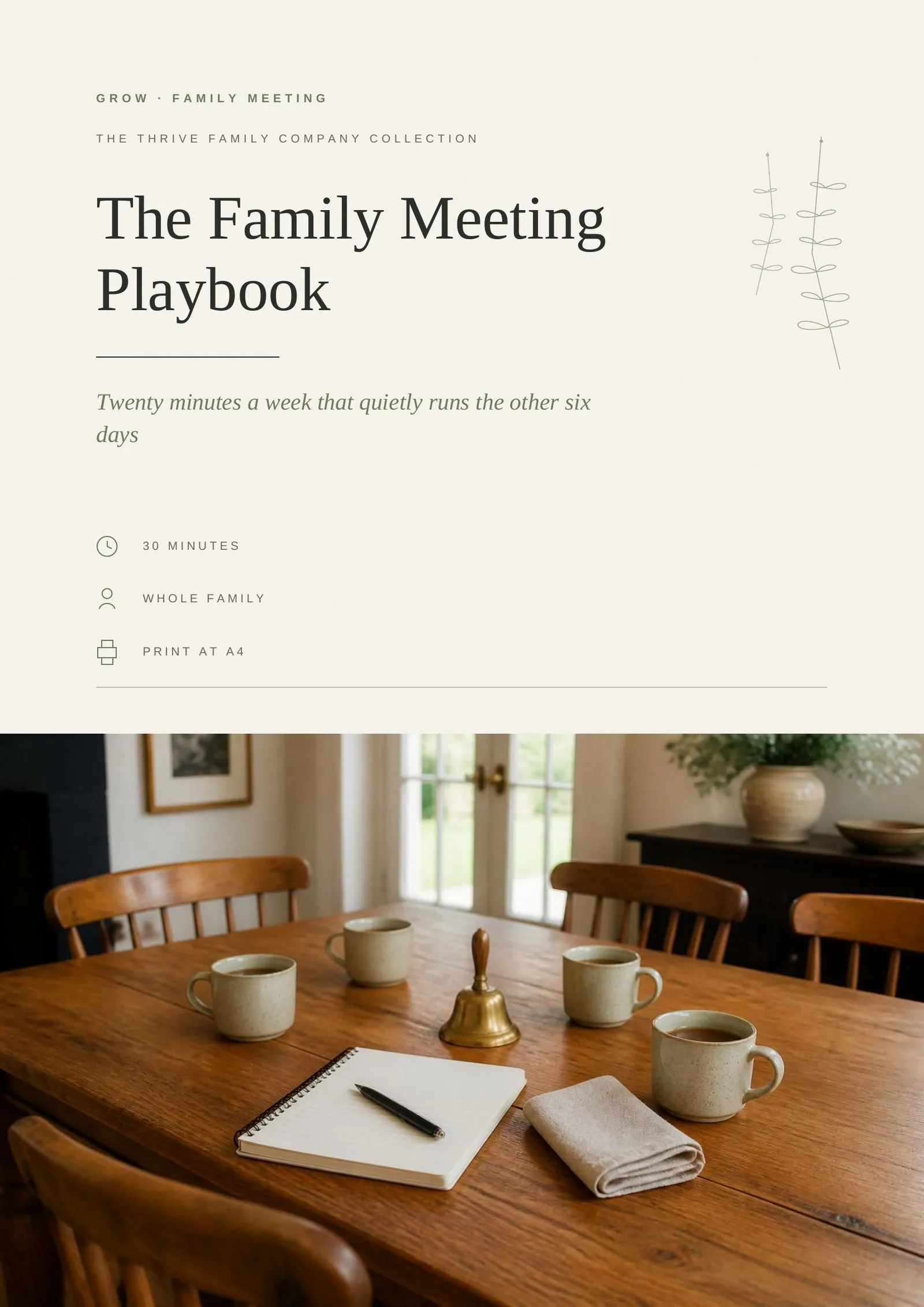
A four-page playbook for a twenty-minute weekly meeting: wins, gratitude, calendar, one problem solved, and action items with names beside them.
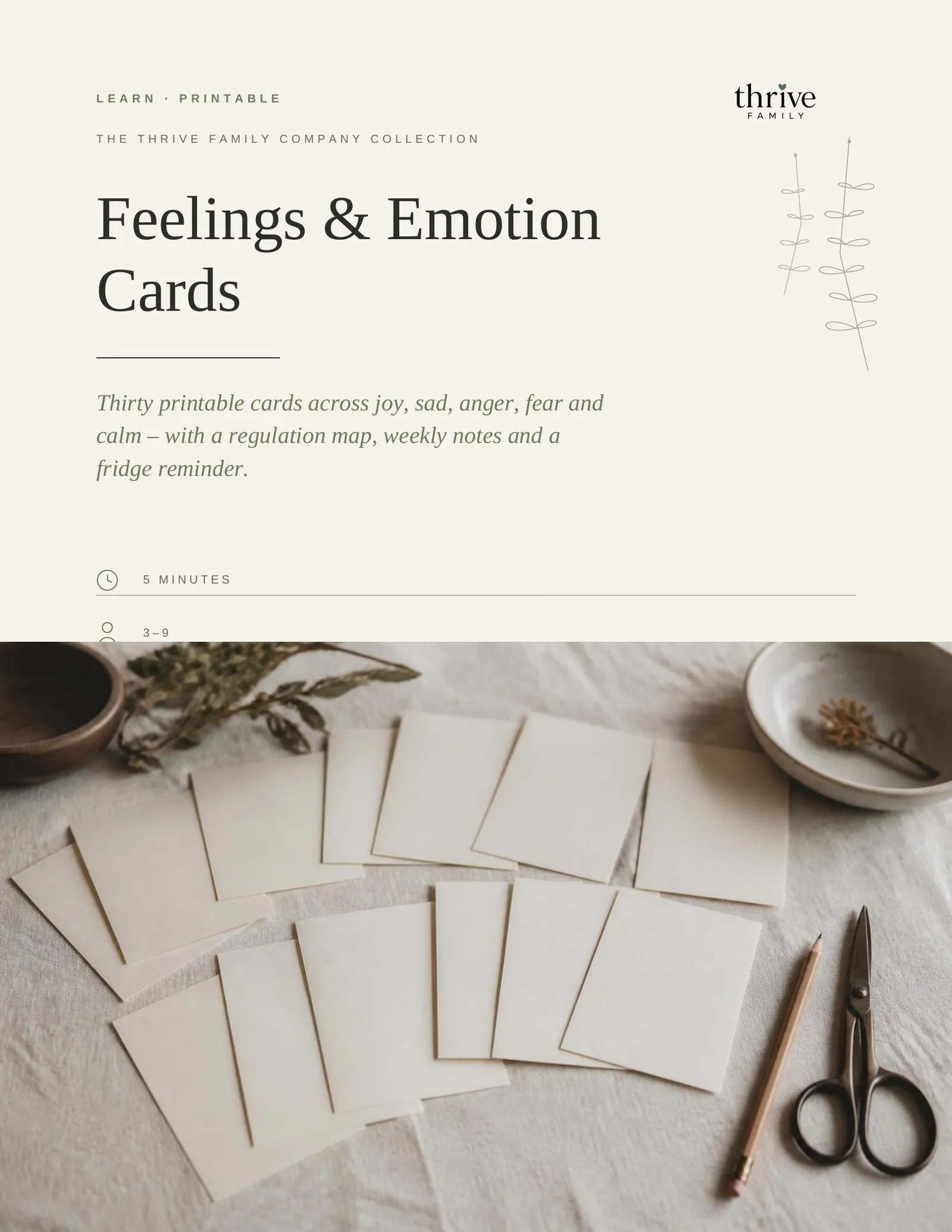
Thirty printable cards across joy, sad, anger, fear and calm — with a regulation map, weekly notes and a fridge reminder.
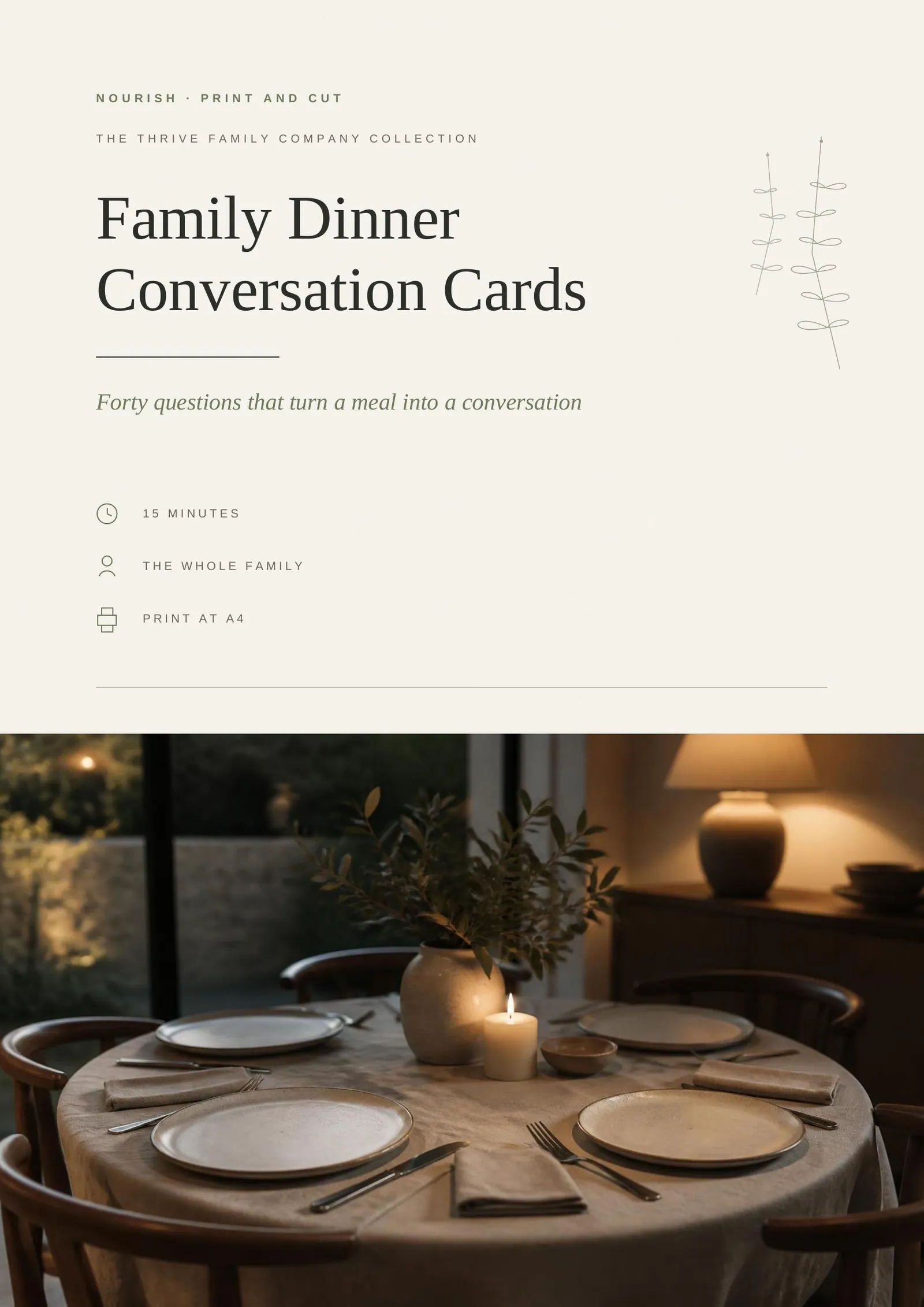
Forty print-and-cut prompts that turn a meal into a conversation — answerable at six, still interesting at fifteen.

Ten claims parents hear constantly, where the evidence actually sits, and what each one means for your table tonight.
Build an agenda that holds connection, logistics and repair in twenty minutes.
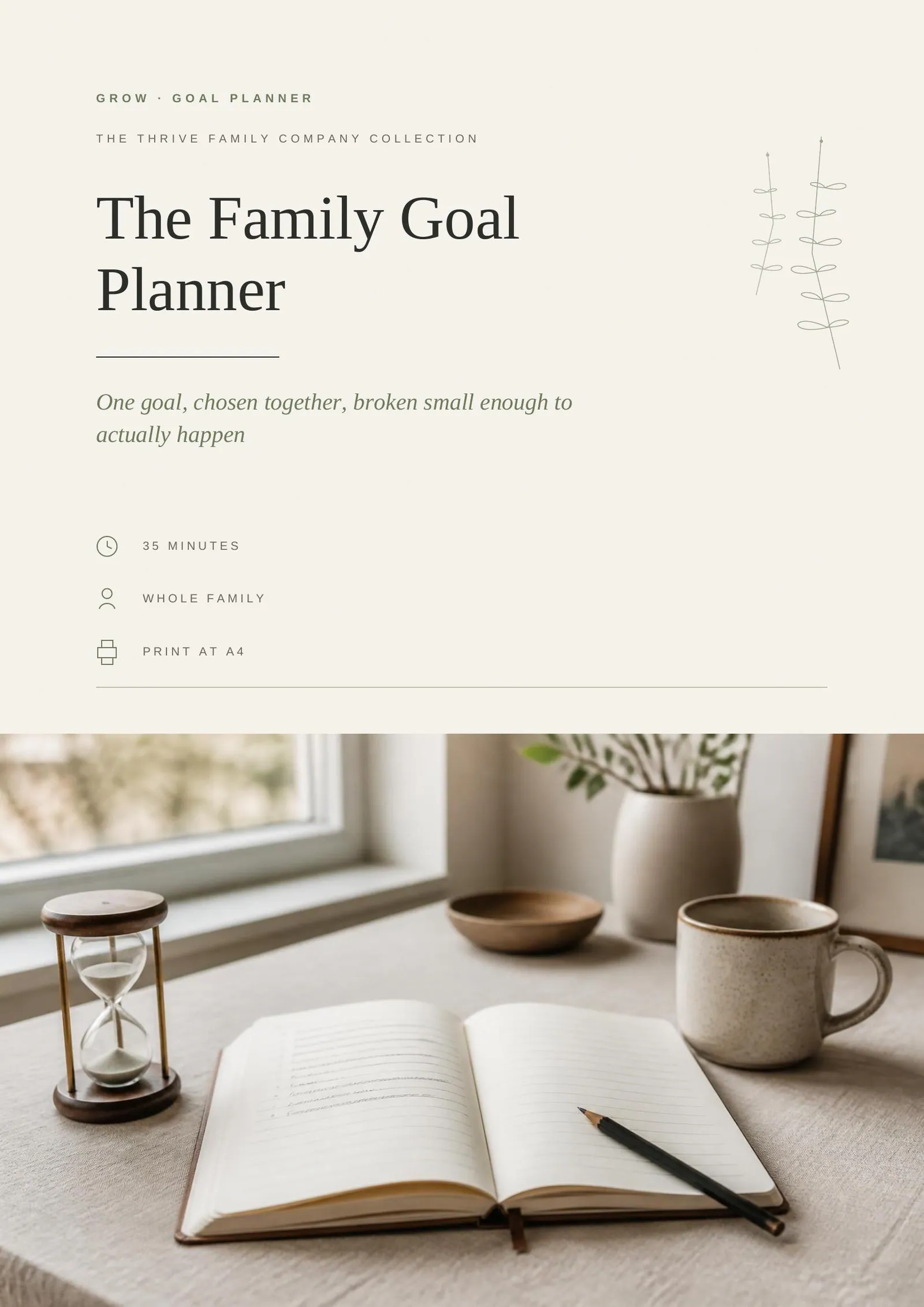
One shared goal broken into steps small enough to start this week, with obstacles named in advance and milestones worth celebrating.
A calm, two-page planning ritual — one written week of meals, a shopping list built from it, and a reflection on what to repeat.
Two customised visual timelines built with your child, so the list gives the instruction instead of you.
Seven evenings of quiet observation across mood, energy, focus, sleep, hydration and meals — then one change worth keeping.
Two weeks of simple observations that reveal the trigger sitting underneath a behaviour you have been treating as random.
Draft a family-owned technology agreement, negotiated rather than imposed.
Everything a genuine co-regulation space needs — and the four things that quietly turn it into a punishment corner.

Walk your home room by room and find the light, sound and texture load nobody had named.

Where worry actually lives in the body — a mapping exercise that turns a vague feeling into information.
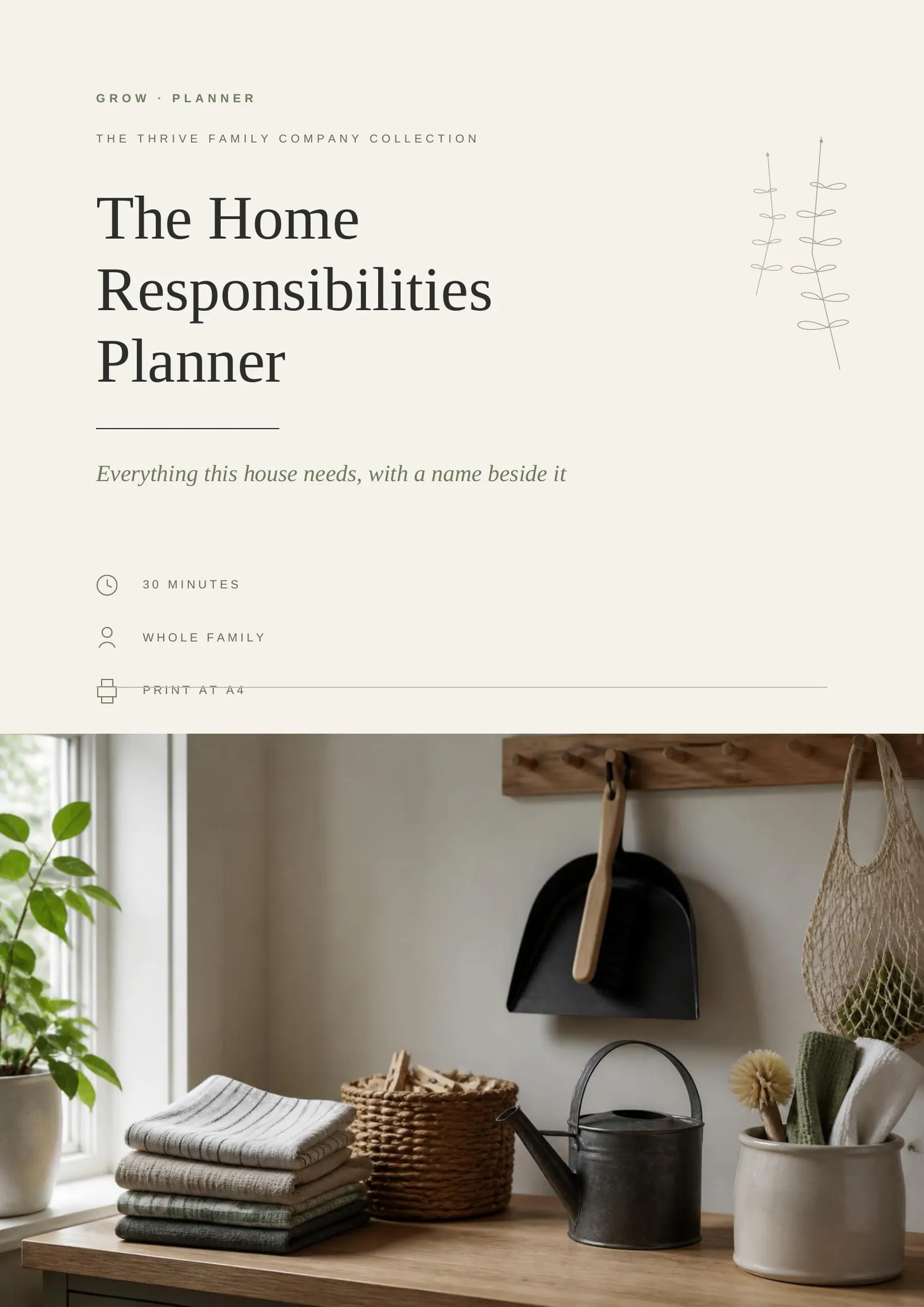
Daily, weekly and monthly household tasks listed, owned by name, and set on a rotation the family agreed.

Exact sentences for the moment before it tips — short, low-arousal and rehearsable.
A compassionate, staged return plan built around the morning hours that actually decide the day.
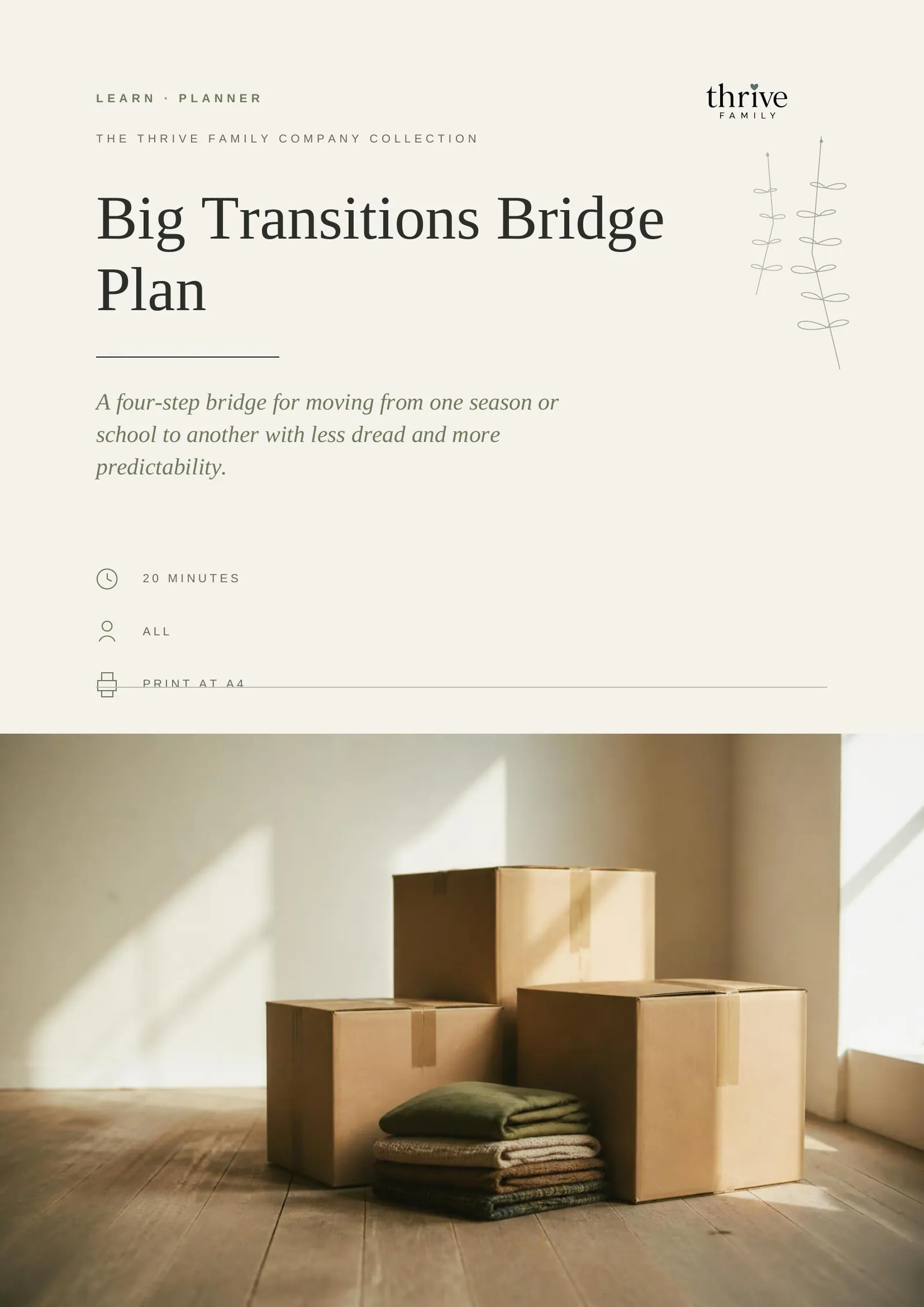
A four-step bridge for moving from one season or school to another with less dread and more predictability.
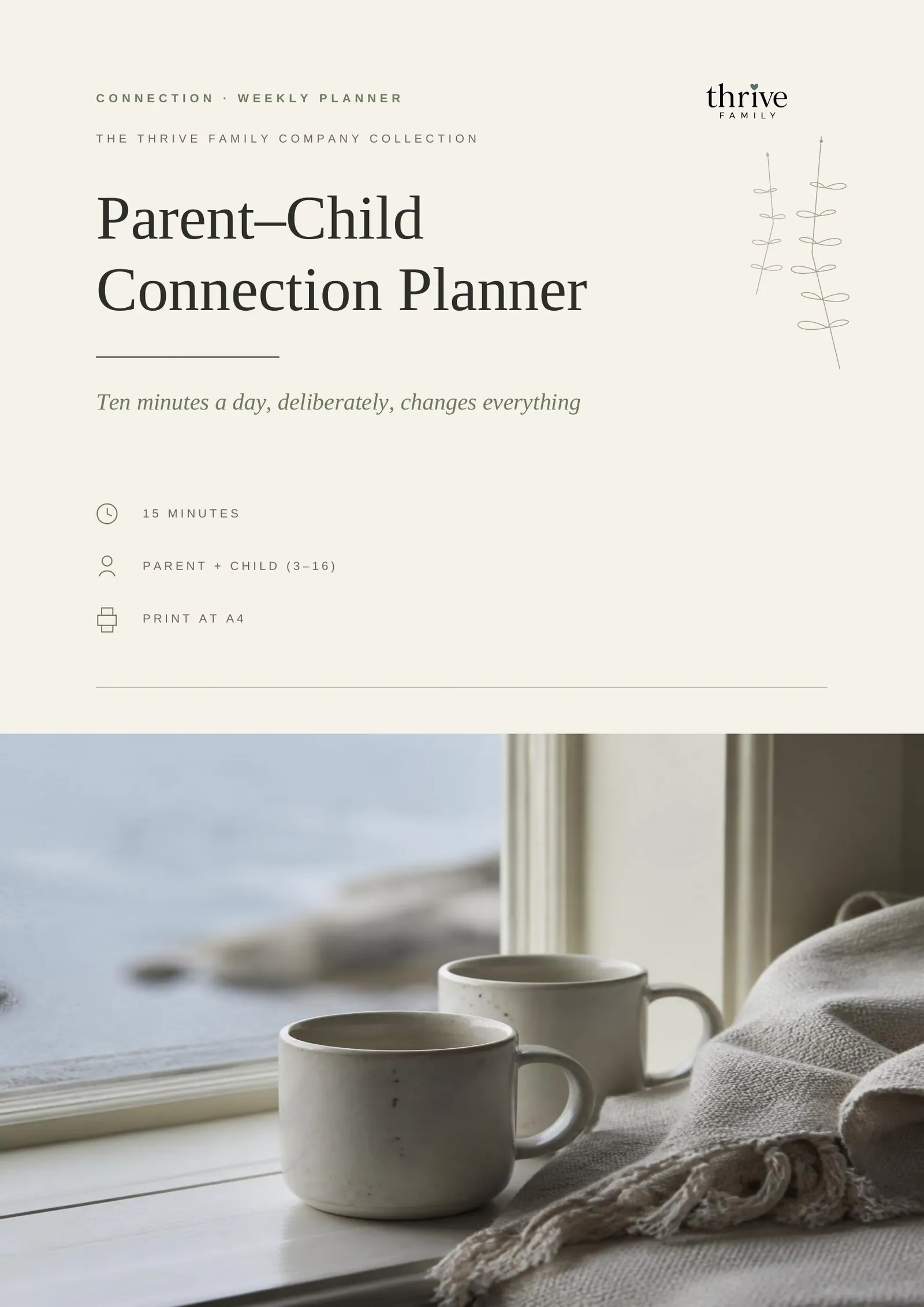
Ten minutes of child-led time, planned for the week — the smallest intervention with the largest behavioural return.