The Child Who Cannot Lose
The board goes flying, the game is ruined, and everyone is walking on eggshells by Sunday afternoon.
Reviewed by Sian Trombley, CCCFounder, Thrive Family Company
8 min read
Best for parents of children who are…
- having big feelings that arrive faster than words
- needing help bouncing back after setbacks
- showing behaviour that feels out of character
- being hard on themselves

Share this
It is a wet Sunday. Twenty minutes into a board game your child is behind, and you can already see it building — the tight shoulders, the rule dispute, and then the box on the floor.
Why losing feels unbearable
For some children, performance and worth have become the same thing. A lost round is not a lost round; it is confirmation of the thing they most fear about themselves. That is far too much weight for a Sunday game to carry.
Add a still-developing prefrontal cortex and a body already tired from a week of holding it together, and the flying board becomes fairly predictable.
Building tolerance instead of avoiding it
The reflex in most families is to reduce the number of losses — letting them win, avoiding competitive games, quietly stopping before the end. It buys peace and prevents learning.
What builds tolerance is repeated, small, survivable failure with a calm adult present. Short games, frequent losses, and no drama from you afterwards.
- 01Announce the deal upfront
Someone loses, the game still ends well, nobody leaves. Say it before the first move.
- 02Keep games short
Fifteen minutes maximum at first. Long games raise the stakes and the exhaustion.
- 03Stay flat when it goes wrong
No lecture, no consequence in the moment. Pick up the pieces calmly; discuss tomorrow if at all.
- 04Praise the recovery, not the grace
'You wanted to walk off and you stayed. That's the hard bit.' Reinforce the specific muscle.
- 05Rebuild the same day
Offer a rematch within the hour. Ending on a collapse teaches that collapse ends things.
When it goes beyond games
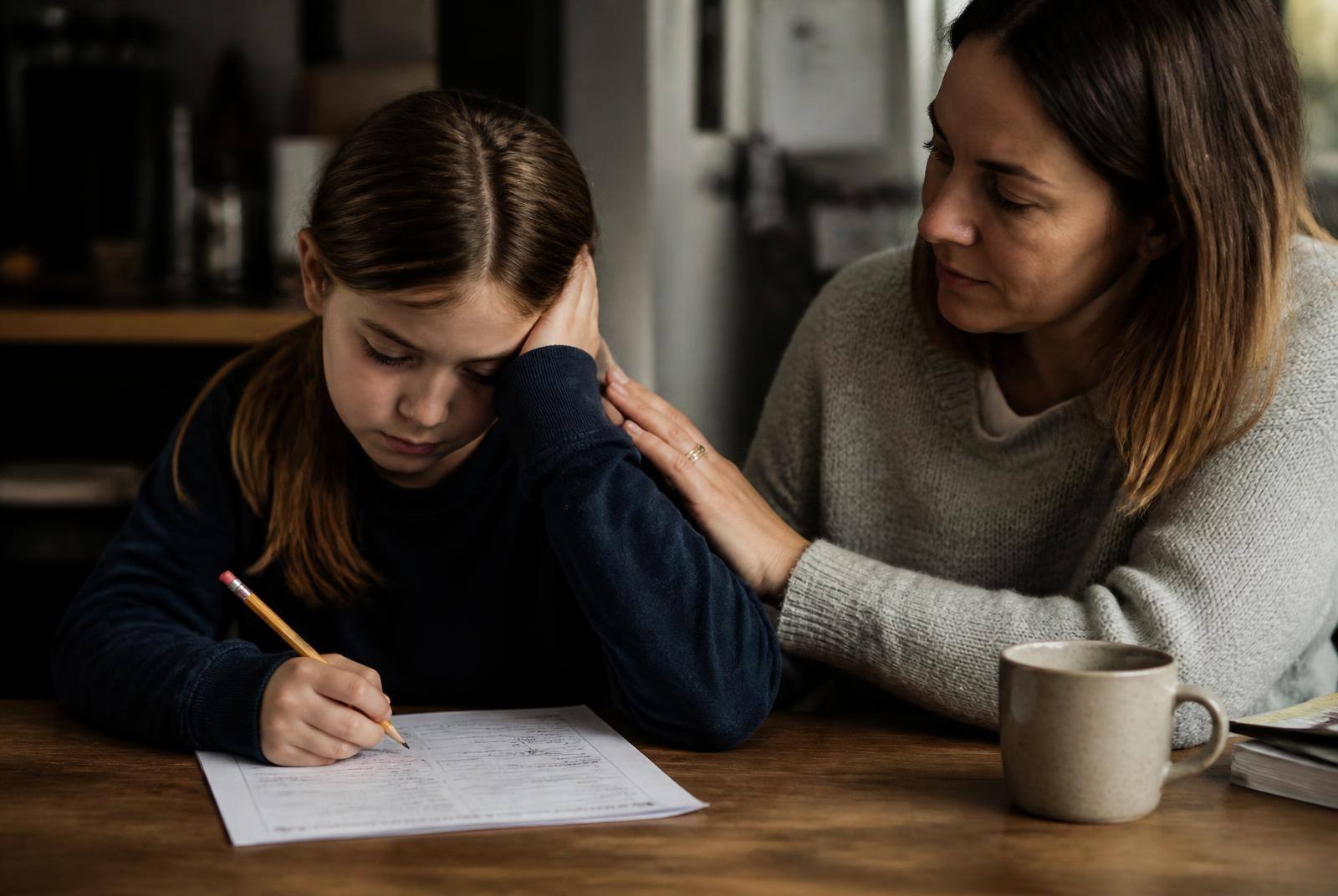
If the same pattern shows up in schoolwork, sport and hobbies — abandoning anything not immediately mastered, tearing up work, refusing to try — you are looking at perfectionism rather than competitiveness, and it is worth addressing directly.
Perfectionism responds well to deliberate practice at being imperfect: a mistake left in on purpose, a piece of work handed in good-enough, a task attempted publicly and badly.
Losing a game is small. What is not small is being seen to lose it.
Sian Trombley, Canadian Certified Counsellor
What you can try this week
Lose loudly yourself
Narrate it: 'Argh — I hate that. Right. Good game.' You are demonstrating the whole sequence they cannot yet do.
Play short, high-luck games
Snap or dice games mean losses come quickly and are obviously not about ability. Repetition builds tolerance.
Name the ending before you start
'One of us is going to lose in about ten minutes and that's the deal.' Predictability lowers the threat.
- Losing badly is usually about self-worth, not competitiveness.
- Letting them win removes the practice they most need.
- Frustration tolerance grows in small, survivable doses.
- Praise the strategy, not the child's cleverness.
- How adults lose in the house is the strongest lesson available.
What does my child believe losing says about them?
Do we celebrate results or effort in this house?
How do I react when I lose in front of them?
Printable resources
Recommended Thrive courses
This article is educational and is not a substitute for individual clinical advice. Comments are closed so the Journal stays a calm place to read.
Share this
Keep going
You may also like
Courses, worksheets and pathways from the same part of the library.
- JournalThe Compliment They Cannot Take: Praise and the Child Who DeflectsA compliment asks a child to agree with you about themselves. If they don't, the kindest sentence in the room becomes the most uncomfortable.Read
- JournalThe Cost of Getting It Right: Perfectionism in ChildrenPerfectionism is not high standards. It is the fear of what a mistake will prove about you.Read
- CollectionSelf-EsteemEverything Thrive publishes on self-esteem — articles, courses, worksheets and research.Read
- ResearchThe Research LibraryPeer-reviewed parenting and child mental health research, translated into plain language.Read
- Thrive GuideThrive GuideAsk a question and get warm, evidence-informed guidance drawn from the Thrive library.Read
- Thrive Care PlanThrive Care PlanA short check-in that turns how your week actually went into one focused plan.Read