The Quiet Child in a Loud Family
Some children do not compete for the airtime. They simply stop expecting any.
Reviewed by Sian Trombley, CCCFounder, Thrive Family Company
8 min read
Best for parents of children who are…
- being hard on themselves
- clashing with a brother or sister
- struggling to say what is really going on

Share this
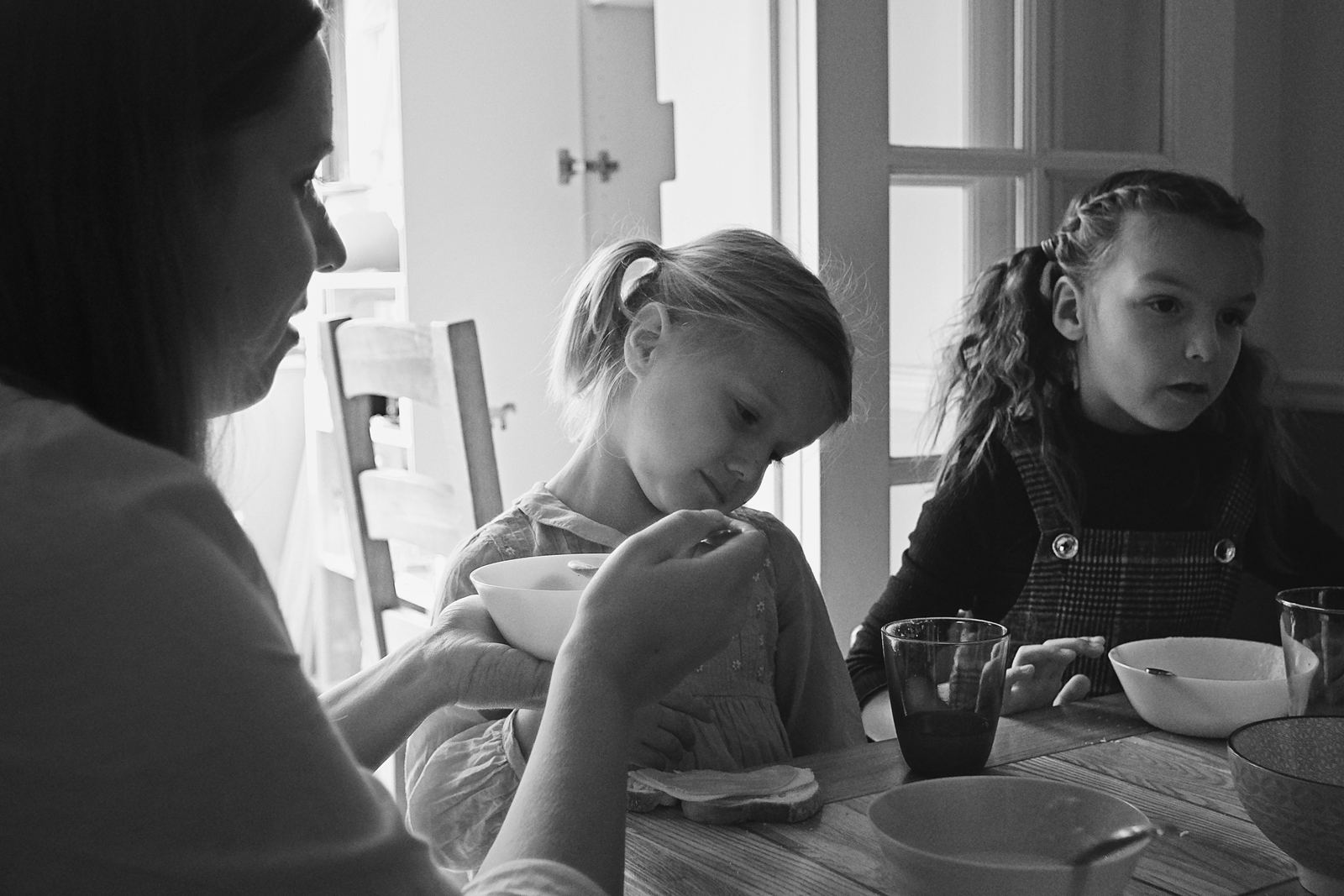
At the dinner table there are four conversations happening and one child eating quietly through all of them, contributing nothing, and being described later that evening as no trouble at all.
The cost of being easy
Attention in families is a finite resource, and it flows towards need. The child who shouts, refuses or struggles receives it. The child who manages does not — and quickly learns that managing is their role.
This is not neglect. It is arithmetic. But over years it produces a young person who does not expect to be asked, and therefore does not tell.
Making space without a personality transplant
The aim is not to turn a quiet child into a loud one. It is to build reliable conditions in which they will speak: fewer people, less eye contact, more time, and a question that is specific enough to answer.
Almost every quiet child I meet talks freely in a car. There is a reason for that, and it is worth exploiting.
- 01Name a weekly slot
Put it in the calendar with their name on it. Being chosen is most of the effect.
- 02Use activities, not interviews
Baking, driving, a walk. Words come sideways.
- 03Ask smaller questions
Specific and low-stakes beats open and enormous every time.
- 04Give them a role at the table
A quiet child with a job — pouring, serving, choosing the music — has a legitimate place in the noise.
- 05Check the trend, not the day
Compare this month to six months ago. Slow withdrawal is easy to miss up close.
What to watch for
Quiet is fine. Quiet plus withdrawal from things they used to enjoy, sleep changes, stomach aches before school or increasing reluctance to leave the house is a different picture, and it usually needs an adult to go and find it.
The rule of thumb: temperament is stable, difficulty is a change. If your quiet child has become quieter, that is data.
In a loud family, the quiet child is not withdrawn. They are simply waiting for a gap that never comes.
Sian Trombley, Canadian Certified Counsellor
What you can try this week
Create one protected slot
Twenty minutes, same day each week, one child, no siblings. Regularity matters more than length.
Talk shoulder to shoulder
Car journeys, washing up, walking the dog. Quieter children speak far more without eye contact and an audience.
Ask about a specific thing
'How was your day' gets nothing. 'What was the noisiest bit of today?' gets an answer.
- Quietness is temperament, not a problem to be corrected.
- Easy children are the most likely to be under-noticed.
- Internalising difficulties rarely announce themselves.
- Side-by-side time gets more words than face-to-face questions.
- Protect a named slot of one-to-one attention every week.
Who in this house has to work hardest to be heard?
When did I last know something new about my quiet child?
Am I mistaking undemanding for untroubled?
Printable resources
Recommended Thrive courses
This article is educational and is not a substitute for individual clinical advice. Comments are closed so the Journal stays a calm place to read.
Share this
Keep going
You may also like
Courses, worksheets and pathways from the same part of the library.
- CollectionFamily RelationshipsEverything Thrive publishes on family relationships — articles, courses, worksheets and research.Read
- JournalThe Sibling Comparison Trap: When One Child Measures Themselves Against AnotherIn most families, nobody assigns the roles. They emerge quietly, and then everyone spends a decade living up to them.Read
- JournalThe Sibling Storm: What Children Learn Inside Everyday ConflictMost parents are trying to end sibling conflict. The more useful goal is to change what happens inside it — because this is the relationship where children learn repair.Read
- Learning PathwayFamily RelationshipsA guided Learning Pathway from Thrive Family Company.Read
- Thrive Resource GuideFamily RelationshipsTherapist-reviewed books, apps, websites and tools for family relationships.Read
- ResearchThe Research LibraryPeer-reviewed parenting and child mental health research, translated into plain language.Read