The Teacher Who Does Not Warm to Them
When a child feels unliked by an adult in authority, school becomes an exhausting performance. How to protect their dignity without declaring war on the classroom.
Reviewed by Sian Trombley, CCCFounder, Thrive Family Company
9 min read
Best for parents of children who are…
- going from calm to overwhelmed very quickly
- needing extra emotional support at the moment
- going through a change at home or at school

Share this
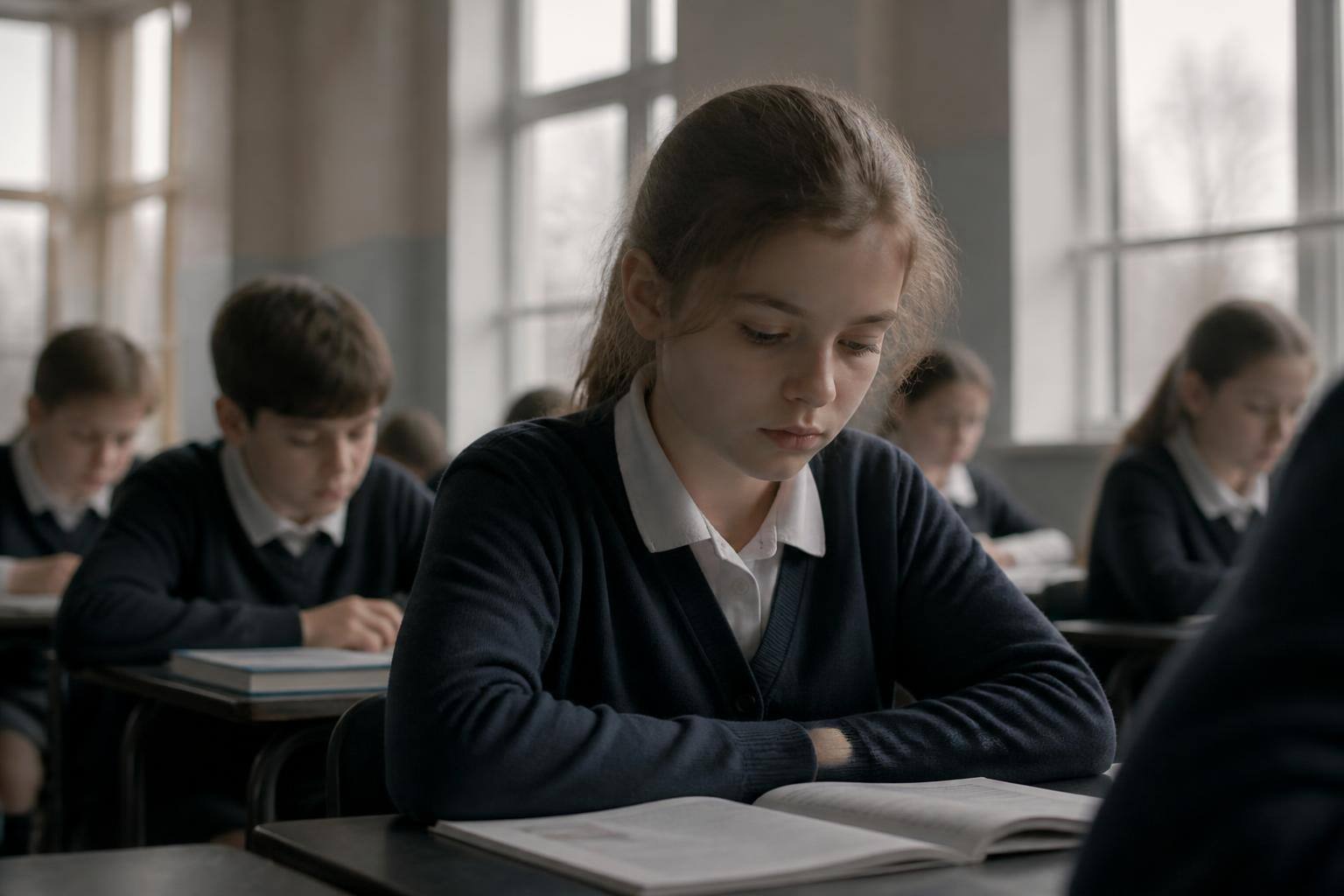
It usually arrives quietly over dinner or just before lights-out. 'Mr. Harris doesn't like me.' Or 'She always picks on me even when everyone else is talking.' For a parent, it is one of the hardest sentences to hear because it touches a primitive nerve: someone in authority is cold toward our child, and we are not in the room to protect them.
In school-aged children and teenagers, feeling unliked by a teacher can transform an otherwise ordinary school day into an exhausting daily audition. Understanding what is happening beneath the surface is the first step toward restoring their confidence.
Why authority sensitivity matters so much
Between the ages of seven and sixteen, children spend more waking hours with their teachers than with their parents. A teacher is not just an instructor; to a child's nervous system, they are the climate controller of the classroom.
- Micro-expressions: Children register subtle sighs, delayed smiles, and tone shifts long before adults realize they are sending them.
- Personality friction: Just as in adult workplaces, not every temperament meshes effortlessly.
- High standards vs. coldness: A strict teacher can feel unsafe to a child who equates correction with rejection.
- The spotlight effect: Anxious children often assume they are being scrutinized more harshly than their peers.
How to respond when your child confides in you
When and how to intervene with the school
- 01Look for patterns over weeks
A single rough Tuesday is different from a persistent pattern of exclusion or sarcasm.
- 02Partner with the teacher first
Assume positive intent in your opening communication. Most teachers care deeply and may be unaware of how their style is landing.
- 03Focus on observable impacts
Share what you see at home: 'Maya is feeling unusually anxious before third period—we'd love your partnership in helping her feel settled.'
- 04Involve leadership only when dignity is breached
If there is humiliation, chronic sarcasm, or retaliation, escalate calmly to leadership with clear dates and observations.
A child who believes a teacher dislikes them stops learning from that teacher long before anyone notices.
Sian Trombley, Canadian Certified Counsellor
What you can try this week
Separate learning from approval
Help your child practise the distinction between doing good work and winning personal affection. 'We go to school to grow our minds, not to make every adult our best friend.'
Audit the evidence calmly
Ask neutral, curious questions: 'What happened right before that?' or 'How did she respond when others did the same thing?' This builds objective perspective without dismissing their feelings.
Send a collaborative note
If the pattern persists, email the teacher with curiosity rather than confrontation: 'We've noticed Leo seems quiet about math lately—how is he feeling in class from your perspective?'
- Children rarely invent feelings of relational coldness; their sensors are accurate even when their explanations are clumsy.
- A child's self-worth must be insulated from any single classroom adult's mood or personality style.
- Validating the feeling ('That sounds really uncomfortable to sit with') is far more grounding than dismissing it ('I am sure she likes everyone equally').
- Advocacy works best when framed around the child's learning needs rather than accusations of unfairness.
- Learning to navigate a personality mismatch with dignity is a life skill that extends far beyond school.
Am I reacting to my child's teacher from my own childhood school memories?
How can I help my child feel anchored at home so one classroom relationship does not define their worth?
What boundaries of respect should we expect from any adult in authority?
Printable resources
This article is educational and is not a substitute for individual clinical advice. Comments are closed so the Journal stays a calm place to read.
Share this
Keep going
You may also like
Courses, worksheets and pathways from the same part of the library.
- JournalWhen School Becomes Too Much: Understanding School RefusalThe stomach ache is real. The refusal is not manipulation. Here is how school avoidance builds, why reassurance and pressure both fail, and what genuinely rebuilds a morning.Read
- Learning PathwaySchool SuccessA guided Learning Pathway from Thrive Family Company.Read
- CollectionSchool & LearningEverything Thrive publishes on school & learning — articles, courses, worksheets and research.Read
- JournalThe Child Who Holds It Together All Day and Falls Apart at 3:30The meltdown at pickup is not a report card on your parenting. It is evidence that home is the one place your child feels safe enough to stop performing.Read
- Thrive Resource GuideSchool SuccessTherapist-reviewed books, apps, websites and tools for school success.Read
- ResearchThe Research LibraryPeer-reviewed parenting and child mental health research, translated into plain language.Read