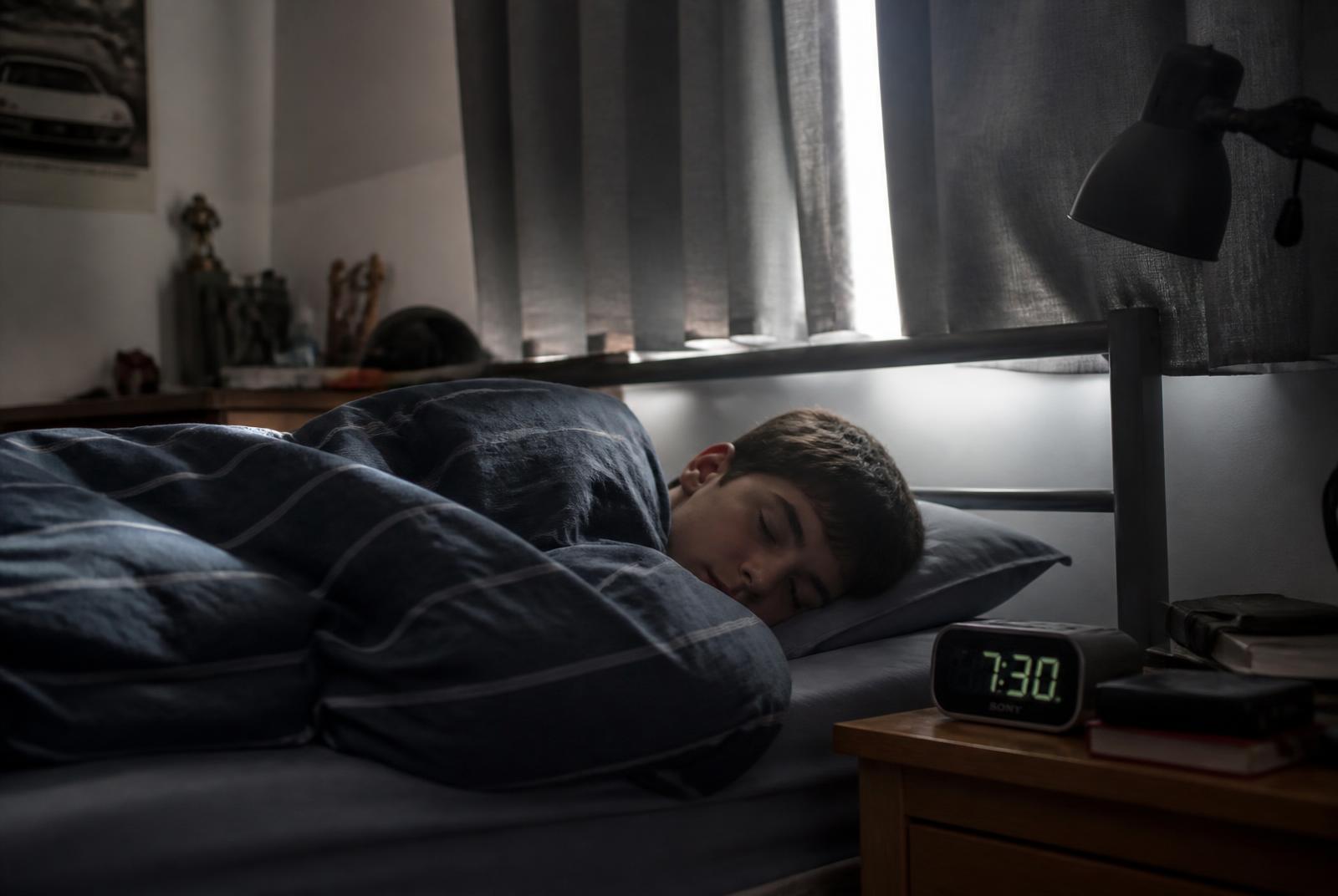
The Teenager Who Sleeps All Weekend
Twelve hours on a Saturday is often biology catching up — but sometimes it is something else.
Written by Sian Trombley · BEd, MACP, CCC
It is one in the afternoon on a Saturday. The door is shut, the curtains are drawn, and the person behind them has been asleep for thirteen hours. You are somewhere between sympathetic and furious.
The biology you are arguing with
At puberty the release of melatonin shifts later by roughly two hours. A teenager who cannot sleep at ten and cannot wake at seven is not being difficult; their internal clock has genuinely moved, and school timetables have not moved with it.
Across a five-day week that mismatch builds a debt of eight to ten hours. The Saturday marathon is the repayment, and physiologically it does work.
When long sleep is a signal, not a solution
The distinction that matters is whether sleep restores. A tired teenager who sleeps in and then surfaces, eats, sees friends and complains about chores is fine. A teenager who sleeps twelve hours and remains flat, uninterested and withdrawn is showing one of the more reliable adolescent markers of depression.
Other things worth ruling out: iron deficiency, thyroid issues, glandular fever, chronic pain, and the quiet exhaustion of masking all week at school.
- 01Anchor the wake time
Within two hours of the school wake time, seven days a week. This single change resolves most drift.
- 02Light first, conversation second
Curtains, then a hot drink, then talking. Do not open with the schedule.
- 03Move screens out of the last hour
Not a morality issue — a light and stimulation issue. Charging the phone outside the room removes the negotiation.
- 04Check the week, not the weekend
If weekdays are averaging under seven hours, the Saturday sleep is a symptom of the timetable.
- 05Screen for mood if flatness persists
Two weeks of low interest, irritability and withdrawal alongside heavy sleep warrants a GP conversation.
What to change first
Wake time is the lever, not bedtime. Telling a teenager to go to bed earlier asks them to fall asleep before their body produces melatonin. Anchoring the wake time — and getting light into their eyes soon after — pulls the whole clock earlier over a week or two.
Do the negotiating on a Wednesday, not at one o'clock on Saturday afternoon with the door between you.
Children do not need a perfect parent. They need a predictable one who returns after hard moments.
Sian Trombley, Canadian Certified Counsellor
What you can try this week
Cap the lie-in, don't abolish it
Aim for no more than two hours later than the weekday wake time. It keeps the body clock from drifting further.
Open the curtains before you talk
Morning light is the strongest signal to the adolescent body clock. Do it before any conversation about getting up.
Track a fortnight honestly
Note bedtime, wake time and mood. Two weeks of data ends most household arguments about whether it is tiredness or something more.
- Teenagers biologically fall asleep later — this is not a choice.
- Weekend catch-up sleep is real recovery, not laziness.
- Sleep plus withdrawal, flatness and lost interest suggests low mood.
- Consistent wake times matter more than consistent bedtimes.
- Light in the morning resets the clock faster than earlier bedtimes do.
Is my teenager tired, or is my teenager flat?
How many hours are they actually getting Monday to Friday?
Is the weekend sleep restoring them, or does nothing restore them?
Printable resources
Recommended Thrive courses

Share this article
This article is educational and is not a substitute for individual clinical advice. Comments are closed so the Journal stays a calm place to read.
Keep going
You may also like
Courses, worksheets and pathways from the same part of the library.
- JournalHow to Talk to Your Teenager So They Talk Back"How was your day?" is not a question. It is a survey, and they have already filled it in.Read
- JournalThe Door That Stays ShutPrivacy is healthy. Disappearance is not. The line between them is thinner than most parents realise.Read
- CollectionRaising TeensEverything Thrive publishes on raising teens — articles, courses, worksheets and research.Read
- Learning PathwayRaising TeensA guided Learning Pathway from Thrive Family Company.Read
- Learning PathwayMental Health First Aid for TeensA guided Learning Pathway from Thrive Family Company.Read
- ResearchThe Research LibraryPeer-reviewed parenting and child mental health research, translated into plain language.Read